
Passover explained from the beginning
Passover is a story of rescue, remembrance & redemption.
Passover—Pesach in Hebrew—is the biblical festival that remembers how God brought the children of Israel out of slavery in Egypt. It begins with a real rescue in Exodus and becomes a family experience designed to tell that story again, generation after generation.
The short answer
What exactly is Passover?
Passover remembers the Exodus: Israel was enslaved in Egypt, God called Moses to confront Pharaoh, and a series of plagues followed Pharaoh’s refusal to release the people. Before the final plague, Israelite households were told to sacrifice a lamb, place its blood on the doorposts, eat unleavened bread and bitter herbs, and be ready to leave. The marked homes were spared—passed over—and the people left Egypt as a free nation.
God then commanded that the rescue be remembered and taught to future generations. That is why Passover is not only a history lesson. It is told around a table through questions, symbols, food, Scripture, prayer, and participation. Randy describes it as a biblical festival and a family teaching experience: to preserve the future, we share the past.
Before there was a Seder table
There was a rescue story.
You do not need previous knowledge. Walk through the story in order and the rest of Passover starts to make sense.
Egypt
Israel’s family grows into an enslaved people.
Jacob’s family came to Egypt during the story of Joseph. Generations later, a new Pharaoh viewed the growing Hebrew population as a threat. The Israelites were forced into hard labor, and Pharaoh even ordered Hebrew baby boys to be killed.
Moses
A child marked for death becomes the deliverer.
Moses survives Pharaoh’s decree, is raised in Pharaoh’s household, later flees Egypt, and encounters God at the burning bush. God sends him back with a direct message for Pharaoh: release My people.
Pharaoh refuses
The ten plagues confront Egypt.
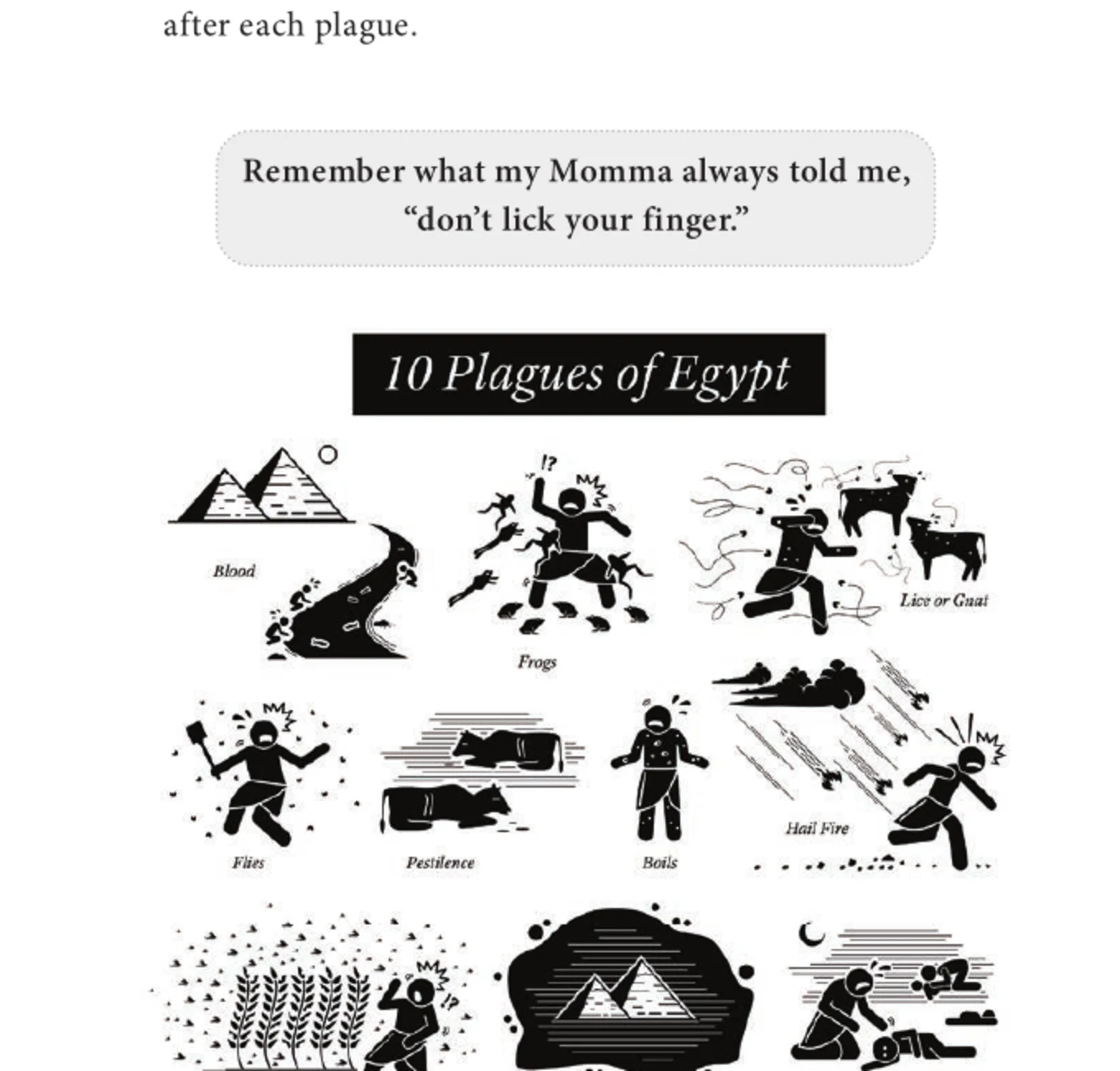
Pharaoh repeatedly refuses to release Israel. The Exodus account moves through blood, frogs, gnats, flies, pestilence, boils, hail, locusts, darkness, and finally the death of the firstborn. At a Seder, the plagues are remembered with sorrow as well as gratitude for deliverance.
The artwork at left comes directly from Randy’s family Haggadah.
The first Passover
A lamb. Blood on the door. A meal eaten ready to leave.
Each household was told to take a lamb without blemish, place its blood on the doorposts and crossbeam, eat the lamb with unleavened bread and bitter herbs, and prepare to depart. The blood became the sign that distinguished the homes that would be spared.
The Exodus
Slaves walk out as a free people.
After the final plague, Pharaoh tells the Israelites to go. The Exodus becomes the defining story of Jewish national redemption. The escape continues through the Red Sea and into a new life in covenant with God.
Remember
The rescue becomes a story every generation must tell.
Passover is deliberately family-centered. Children ask questions. Adults answer. The meal turns memory into participation so the next generation knows what God did. The story is told in the first person: we were slaves, and God brought us out.
The name itself
Why is it called “Passover”?
The biblical story says the blood on the Israelite homes would be a sign. When judgment came through Egypt, those marked homes were spared. The event is remembered as God passing over those households.
That one night became a memorial festival. The rescue from slavery is the center of the story; the Seder is the way the story is retold.
From story to Seder
Passover is meant to be experienced, not just explained.
The Seder is the experience. The Haggadah is the guide that leads everyone through it. Together they turn the Exodus story into something the whole table can participate in.
SEDER
Seder means “order.” It is the ordered Passover service and meal where the Exodus is retold through readings, questions, blessings, food, cups, songs, and family participation.
HAGGADAH
Haggadah means “telling.” It is the book or guide that leads everyone through the Seder—what to say, what to do, when to ask, when to eat, and how to tell the story in order.
Build the Seder plate
Every item tells part of the Exodus story.
The Seder plate is not decoration. It is a teaching tool. Tap each element below and watch the plate fill as you learn what the food means, what it recalls, and why it is sitting at the Passover table.
Build the plate one piece at a time.
Choose any item below. It will appear on the plate and the meaning behind it will open here.
Roasted lamb shank bone
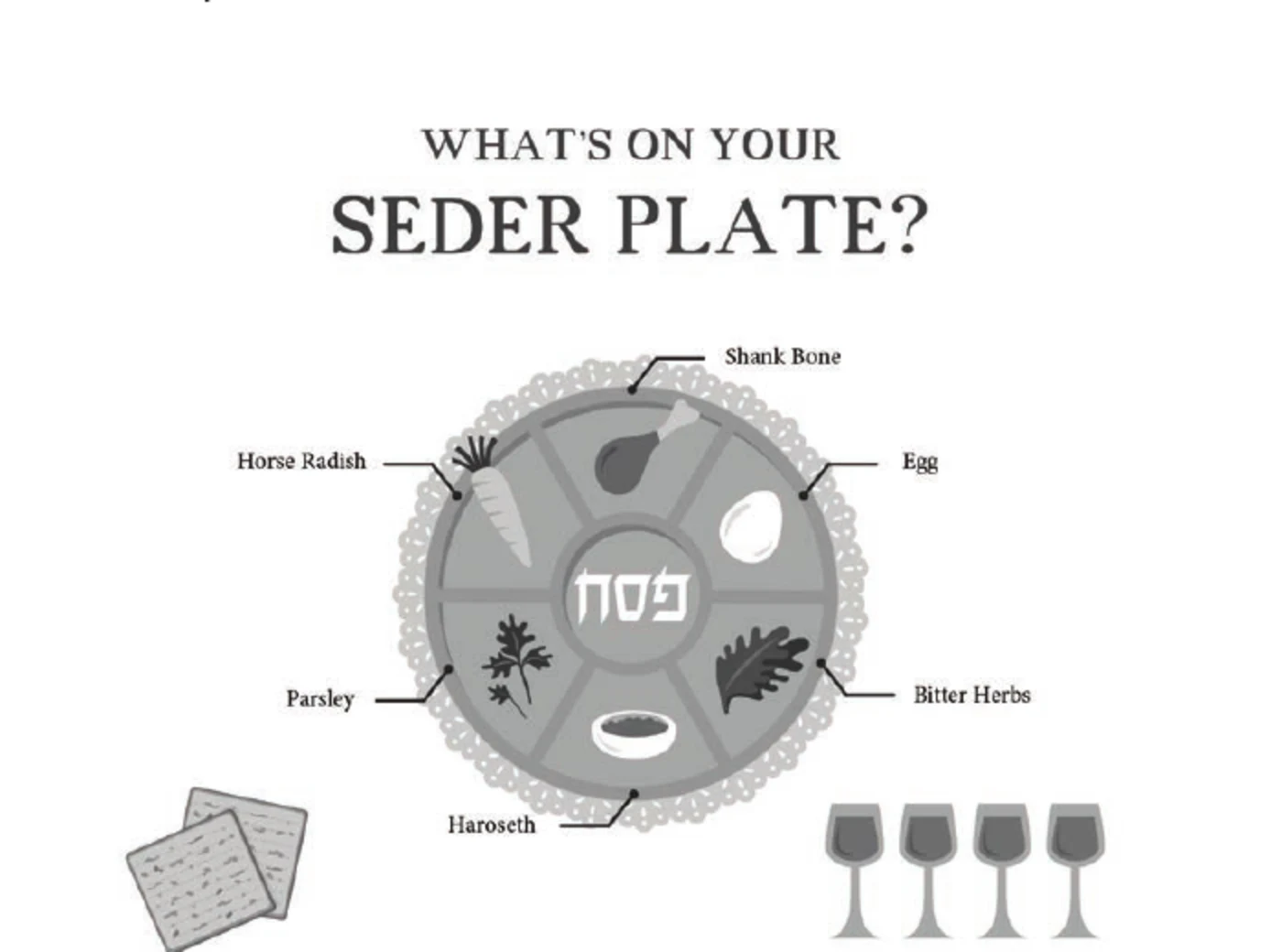
This interactive plate follows the explanations in Do It Yourself Passover. The printed Haggadah gives the full Seder order, readings, blessings, and family instructions.
The three things the story cannot skip
Pesach. Matzah. Maror.
Randy’s Haggadah highlights the traditional teaching that these three ideas must be explained on Passover night.
The Passover lamb
The lamb points back to the sacrifice at the first Passover and the blood that marked the homes in Egypt.
Unleavened bread
Israel left in haste. The dough did not have time to rise, so matzah becomes the bread of the Exodus and a centerpiece of the Seder.
Bitter herbs
The bitter taste makes the bitterness of slavery something participants do not only hear about—they experience it at the table.
What actually happens at a Seder?
You do not sit and listen. You participate.
Different Haggadahs vary, but Randy’s family Seder moves through a recognizable rhythm of blessing, remembering, eating, asking, and responding.
Welcome the festival
Light the candles, bless the first cup, and set the night apart.
Taste the story
Dip parsley in saltwater, break the middle matzah, and hide the Afikomen.
Ask the questions
The Four Questions invite the children—and everyone else—to notice what makes the night different.
Tell the Exodus
Remember slavery, Pharaoh, Moses, the plagues, the lamb, and God’s deliverance.
Eat the symbols
Matzah, bitter herbs, charoses, and the meal turn explanation into participation.
Remember redemption
The cups, Afikomen, Elijah, Psalms, and concluding prayers move the table from Egypt toward hope.
Four promises. Four cups.
A night organized around deliverance.
Randy’s Haggadah connects the four cups to the four movements of redemption in Exodus 6:6–7.
Liberation
“I will bring you out.”
Deliverance
“I will deliver you from slavery.”
Redemption
“I will redeem you.”
Completion
“I will take you to be My people.”
Free people ask questions
Why is this night different?
The Four Questions are not trivia. They are the doorway into the story.
Why do we eat only matzah?
Why do we eat bitter herbs?
Why do we dip twice?
Why do we recline?
Where Christians enter the story
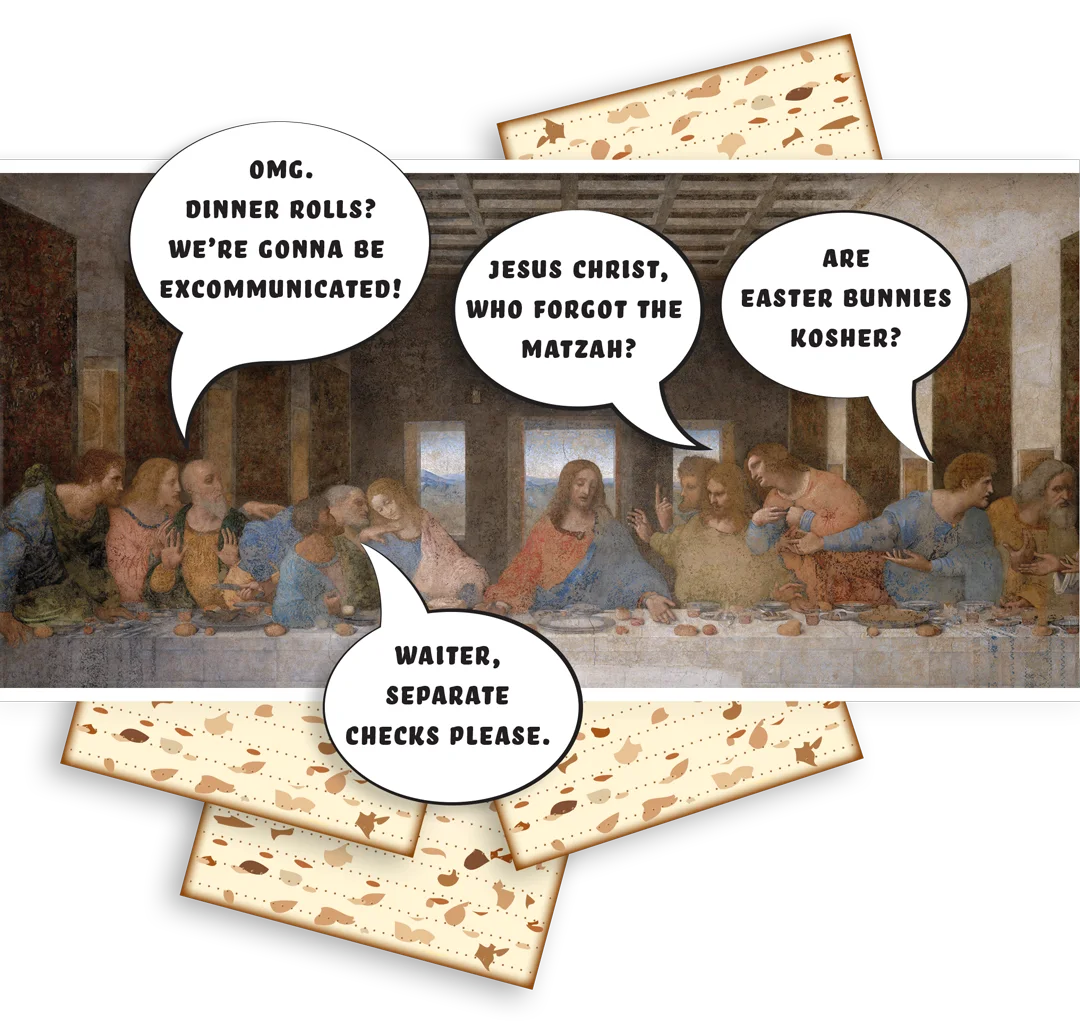
The Last Supper happened inside the Passover story.
The Gospels describe Jesus and His disciples preparing and eating Passover. That means the final meal did not happen in a historical vacuum: matzah, wine, blessing, remembrance, redemption, and Jewish expectation were already in the room.
Randy’s point is not that Christians earn salvation by observing Jewish law. It is that understanding the biblical and Jewish setting of Jesus can make the Gospel accounts, Communion, and the language of redemption much clearer.
Go Deeper in A Passover BackstoryWhere do you want to go next?
Understand it, prepare it, or sit down and experience it.
A Passover Backstory
Explore the history, questions, Jewish roots, humor, and biblical connections behind the festival.
Open the book experience → HOST ONEDo It Yourself Passover
Learn what a Haggadah is, what to prepare, and how Randy’s family guide leads a Christian-friendly Seder.
Prepare your table → USE IT AT THE TABLEInteractive Haggadah
Follow the service step by step on iPhone or Android, or lead a synchronized family Seder.
Start a Seder →